


Women’s Clothing Production with Embroidery | REEL TRİKO
Since 1993, REEL TRİKO has been active in women’s fashion and textile manufacturing, using embroidery as an important design element in its collections.
One of the key advantages of embroidery in fashion is its ability to combine colours, patterns and different techniques to give women’s garments a more distinctive and refined appearance.
Depending on the design, we use different threads, colour combinations and embroidery techniques, planning each application according to the fabric or knitted structure of the garment.
In addition to our customers in Turkey, we prepare collections for boutiques, retailers and professional wholesale buyers in different countries.
Thanks to our experienced embroidery team and modern machinery, we can carry out embroidery applications suitable for different production volumes and design requirements.
Embroidery details are particularly used in our women’s knitwear collections and in various women’s fashion products.
Women’s Clothing Models with Embroidery
Embroidery has a wide range of applications in women’s fashion.
With the correct technique, thread and backing material, embroidery can be applied to many different woven and knitted surfaces. The needle, thread, stabiliser, stitch density and pattern structure must be selected according to the characteristics of each garment.
At REEL TRİKO, embroidery can be used on knitwear, blouses, cardigans, tracksuits and various other women’s fashion products.
What Is Embroidery?
Embroidery is a decorative technique in which different figures, patterns or geometric forms are applied to fabric and similar surfaces using thread.
Traditionally created by hand, embroidery can now also be produced on an industrial scale using computer-aided design systems and multi-needle embroidery machines.
Technological developments have increased production speed while enabling detailed and repeatable embroidery designs.
Embroidery Production Stages and Techniques
Embroidery production consists of several interconnected stages.
The first stage is design.
The embroidery pattern is created digitally according to the collection, garment design and customer requirements.
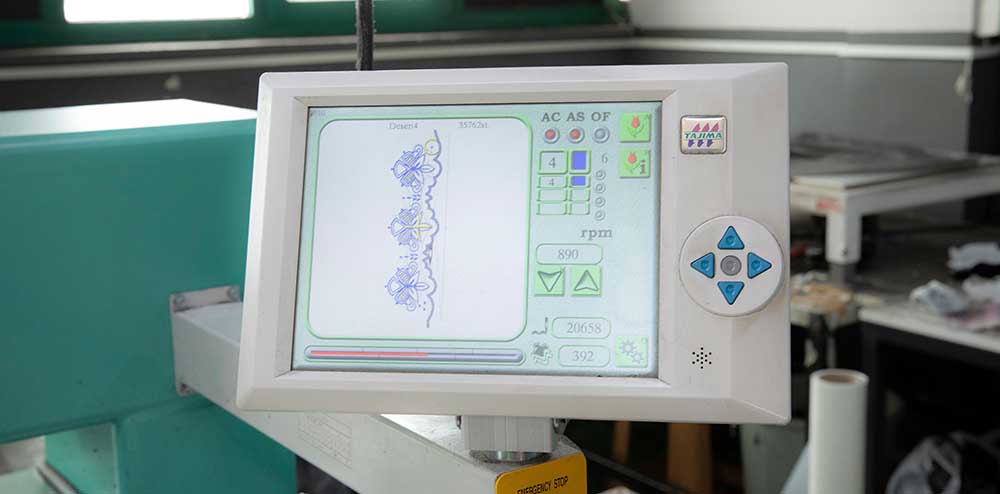
At REEL TRİKO, the Accurate embroidery design software is used during the preparation of embroidery designs.
Each colour section of the pattern is planned separately. Stitch density, number of stitches, dimensions of the design and the working sequence of different threads are determined during the design stage.
Reference points such as the neckline or centre line are taken into consideration to ensure accurate positioning on the garment.
If several colours are used in one embroidery design, their sequence is defined in the machine programme.
The thickness, fineness, volume and density of the embroidery are also controlled through the programmed stitch commands.
Threads and Stabiliser Materials in Embroidery
Selecting the correct thread and stabiliser is one of the key factors affecting embroidery quality.
Materials are selected according to the fabric, knitted structure, pattern density and embroidery technique.
Particular attention is paid to comfort when materials are used on garments that come into contact with the skin.
The stabiliser helps keep the garment surface stable during production and supports accurate formation of the embroidery design.
TAJIMA Embroidery Machines
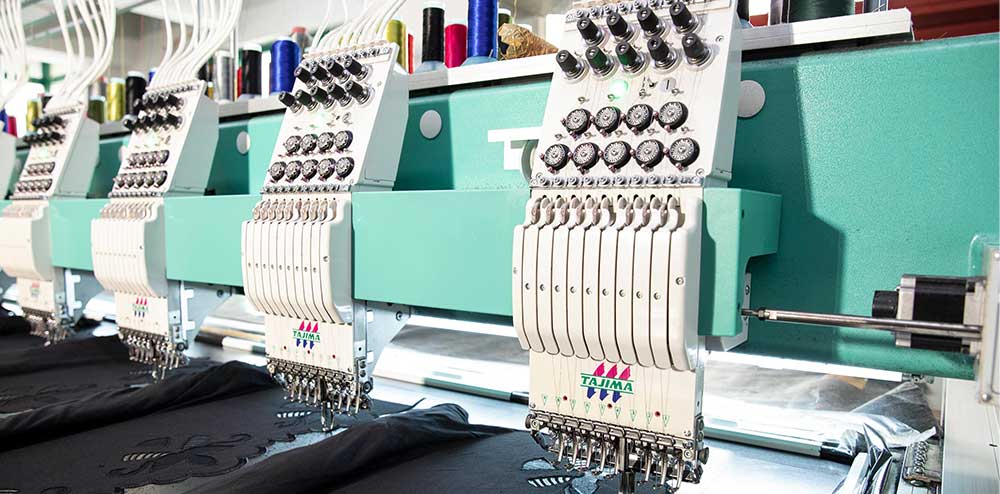
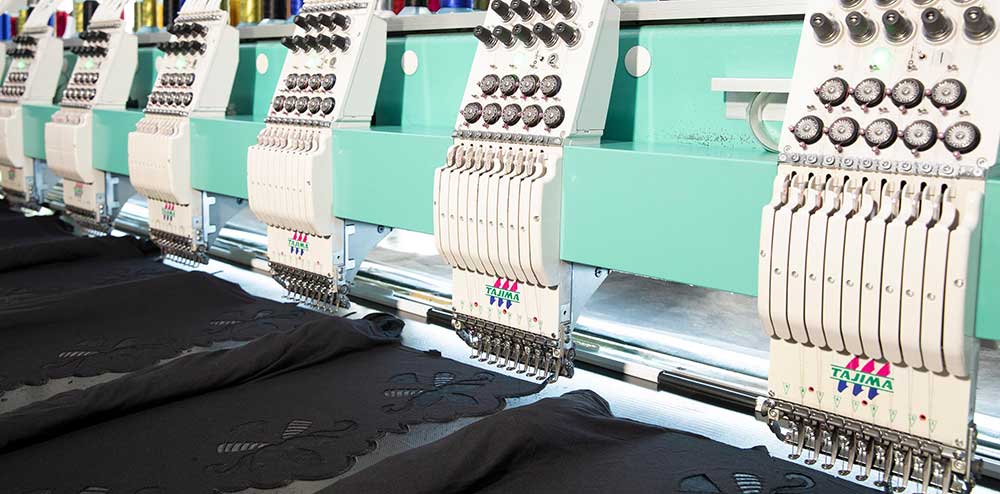
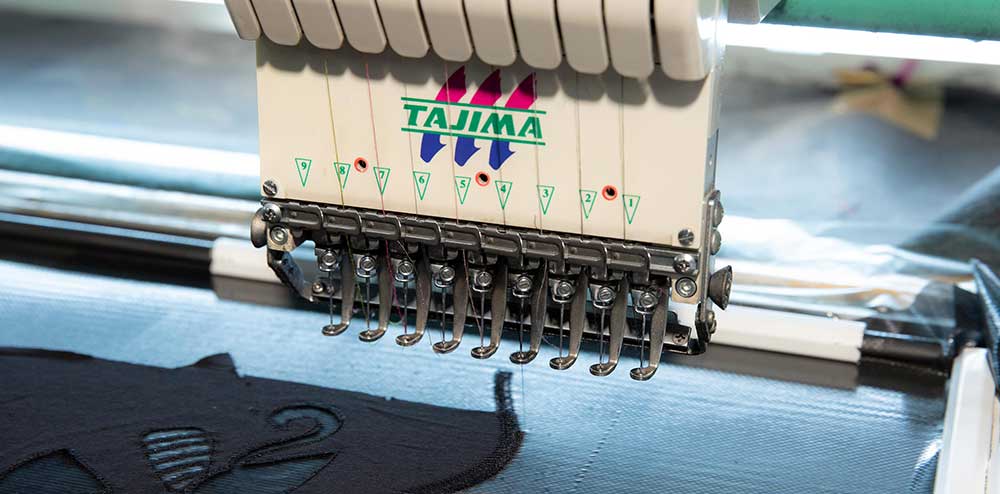
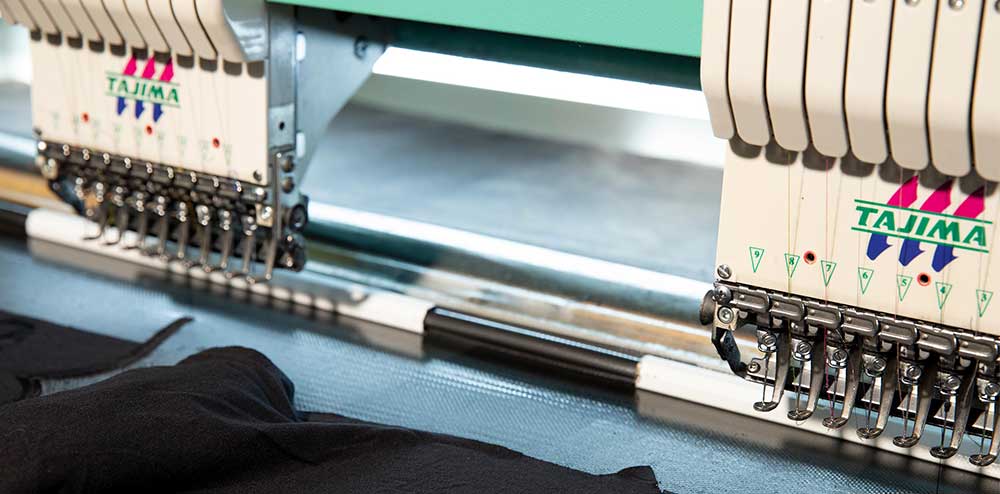
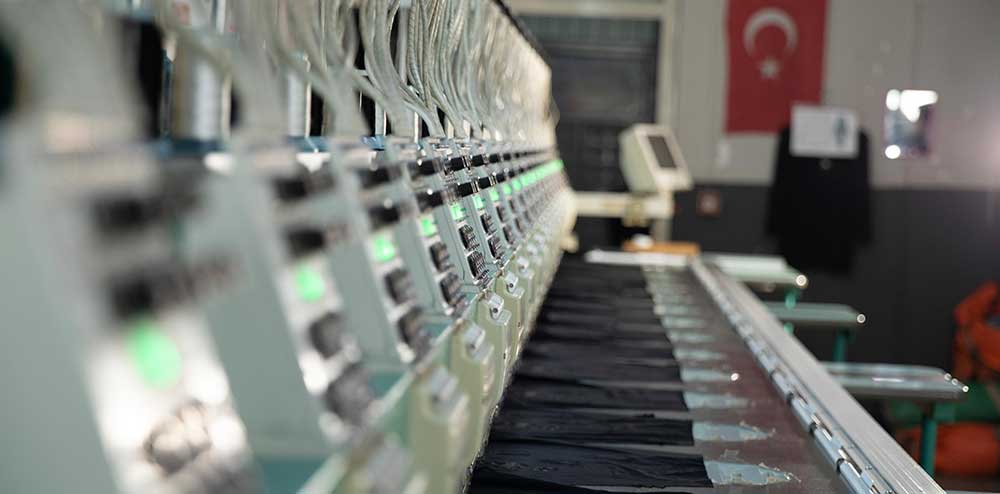
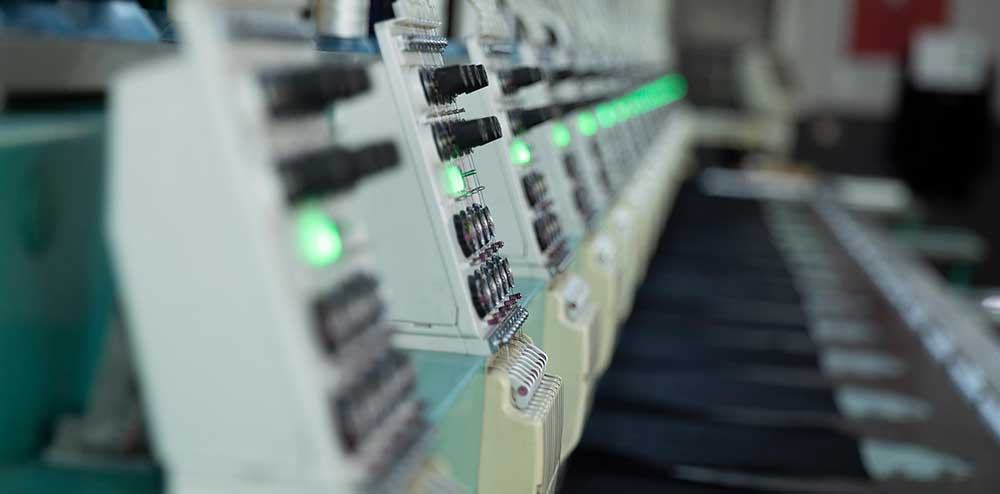
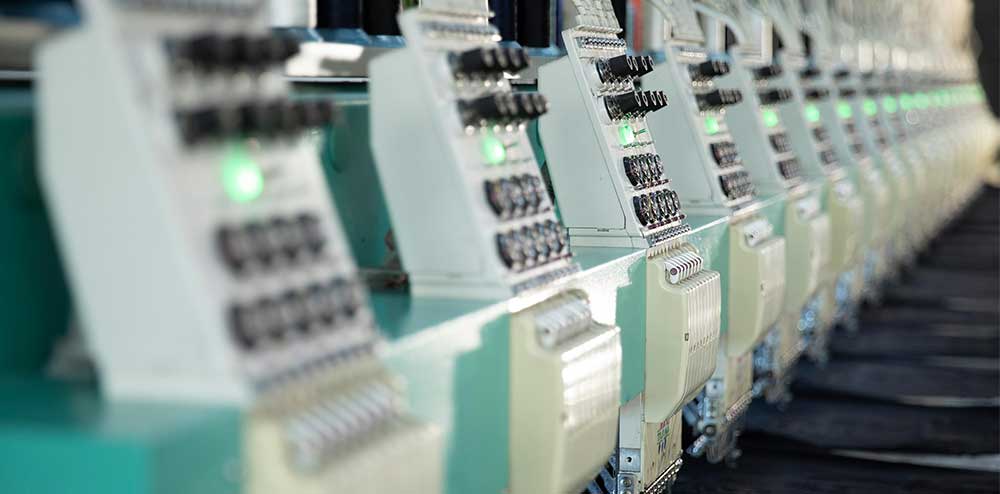
Our TAJIMA TTGNII-918 embroidery machines feature 18 heads with 9 needles per head.
This structure allows several garments to be embroidered simultaneously and makes it possible to use different thread colours within the same design.
Production planning is carried out according to the size of the embroidery, the structure of the garment and the required number of colours.
Raised Embroidery Applications
For raised embroidery designs, suitable support materials can be used to create greater volume and visual definition.
Technical settings are adjusted according to the design, thread and garment surface.
Positioning the Garment During Embroidery
Correct positioning and stabilisation of the garment are essential stages of embroidery production.
If the garment is not properly stabilised, movement of the fabric can cause the embroidery pattern to shift.
For this reason, hooping, reference-point positioning and control of the embroidery area are carefully managed during production.
Processes After Embroidery
After embroidery is completed, excess support material is removed and the embroidered area is inspected.
The cleaning method may vary according to the type of stabiliser or support material used.
The placement of the design, thread quality, potential fabric deformation and overall appearance are checked before the garment continues through production.
The products then pass through our ironing, packaging and quality control processes.
The Importance of Embroidery in Women’s Fashion
High-quality embroidery can add character, elegance and visual distinction to a garment.
Embroidery is not merely a decorative detail; when designed correctly, it becomes an important element that strengthens the overall identity of a collection.
From floral and geometric patterns to minimal or more elaborate applications, different embroidery techniques can be adapted to the design language of each collection.
REEL TRİKO evaluates embroidery together with the garment’s fabric, knitted structure, colour and overall collection concept.
