


What Stages Does Knitted Fabric Go Through in the Cutting Department? | REEL TRİKO
One of the important stages in preparing knitted fabrics for garment production is the cutting department.
At REEL TRİKO, fabrics are selected according to the collection design, garment model, fibre composition, weight, elasticity and production requirements.
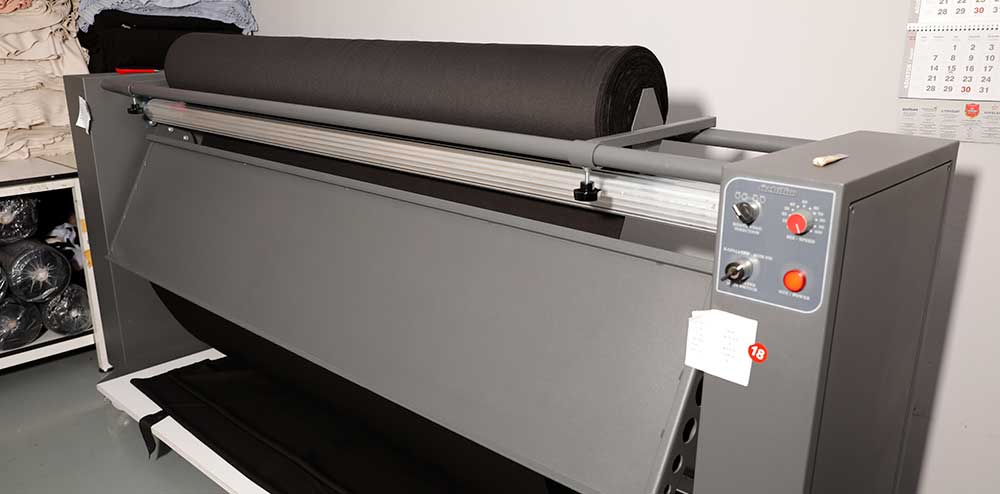
Fabrics arriving at the production facility are not necessarily cut immediately. Especially with knitted and stretch fabrics, a controlled fabric relaxation process may be applied to reduce tensions created during manufacturing, rolling and transportation.
The required relaxation time varies depending on the fibre composition, knitted structure, elasticity and characteristics of the fabric.
This stage is important for reducing unwanted dimensional variations after cutting.
What Is Fabric Relaxation?
During manufacturing, rolling and transportation, fabrics may remain under a certain amount of tension.
This is particularly important for knitted and elastic materials because their dimensions may change after the roll is opened.
Before cutting, the fabric can therefore be spread or opened under suitable conditions and allowed to relax.
The objective is to allow the material to return as closely as possible to its natural dimensions and provide more controlled cutting results.
Fabric Spreading
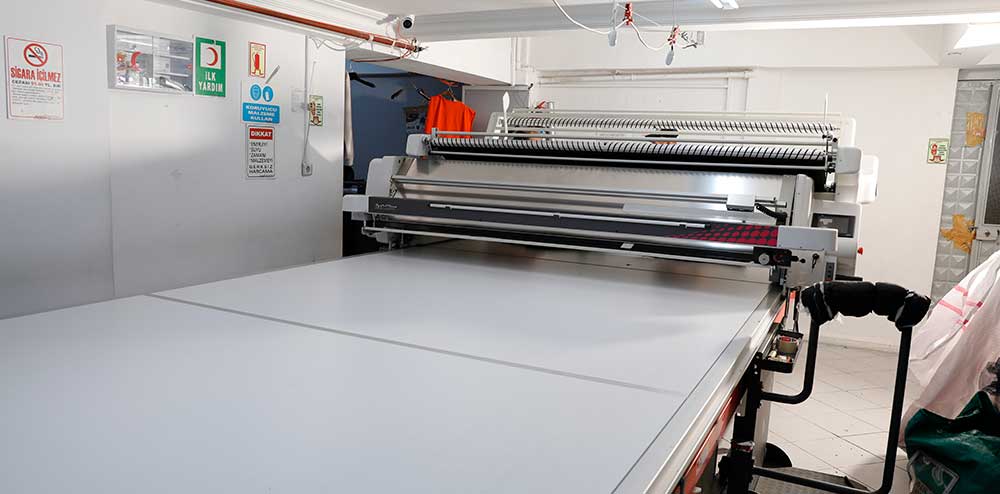
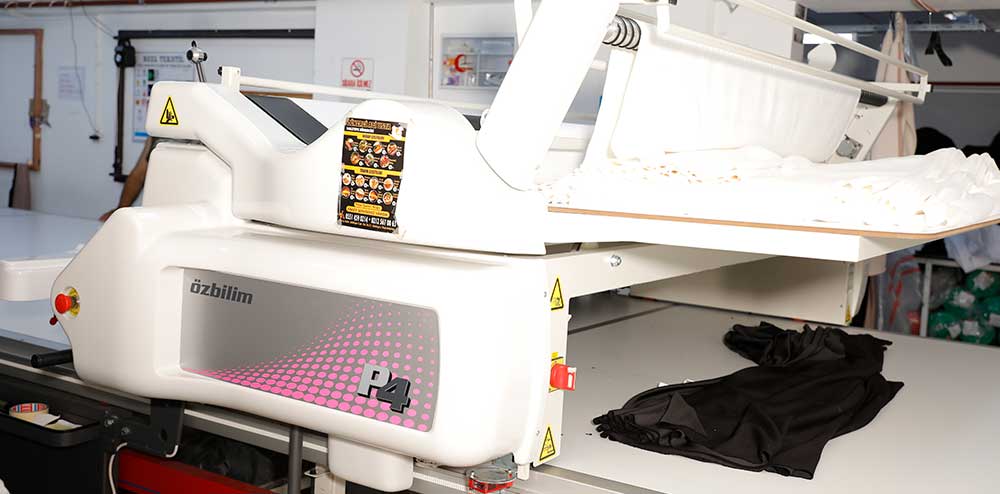
Once the relaxation process is complete, the fabric moves to the spreading stage.
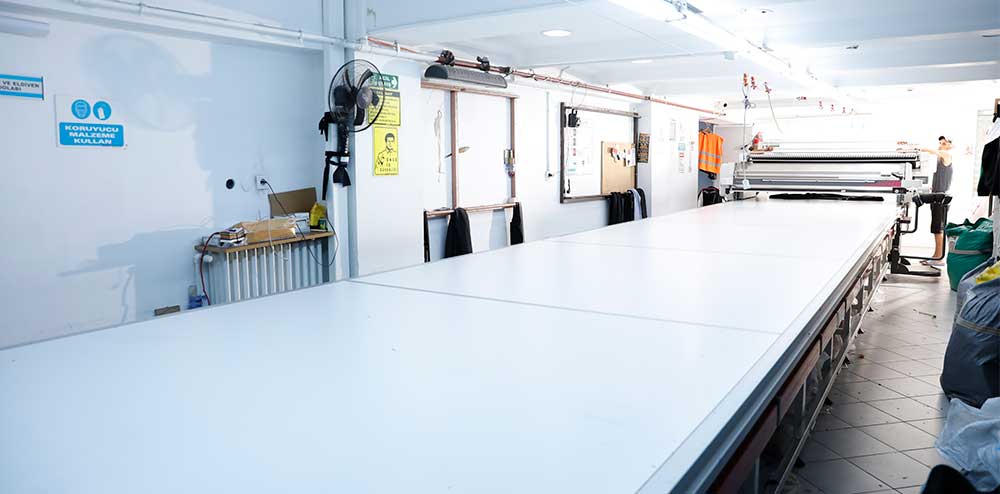
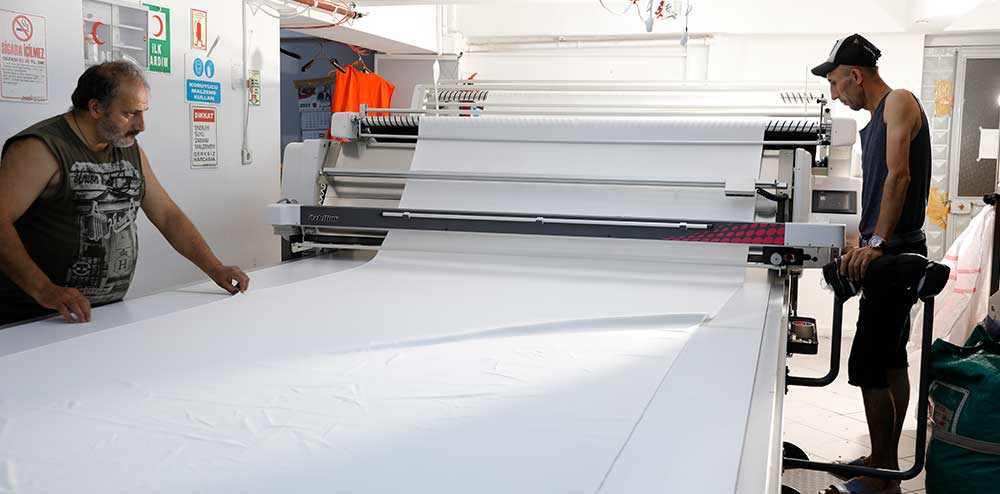
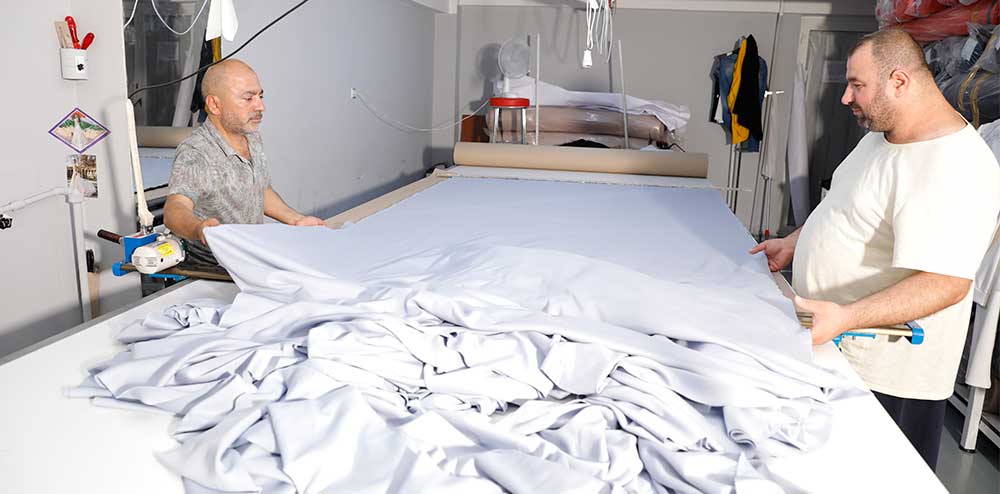
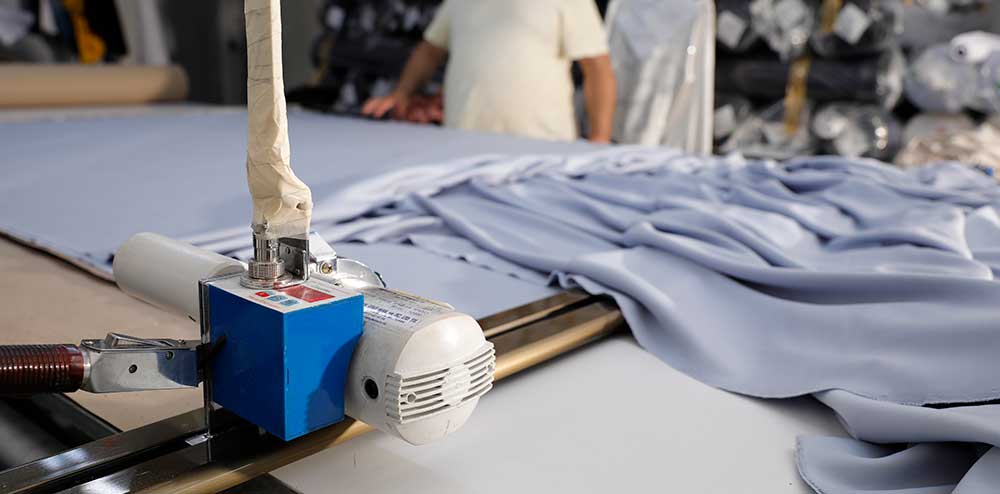
Fabric spreading is the process of laying the material in layers on the cutting table according to the cutting plan.
Depending on the production requirements, automatic spreading systems may be used.
During spreading, attention is paid to:
Correct fabric placement
Alignment of layers
Fabric direction
Stretch characteristics
Pattern and surface differences
Marker plan
Excessive tension must be avoided, particularly with knitted fabrics.
How Is Knitted Fabric Cut?
After spreading, the fabric is cut according to the prepared pattern and marker plan.
Automatic or professional cutting systems can be used for suitable serial-production models.
The objective is not simply to separate the fabric into pieces, but to ensure that each component conforms as closely as possible to the technical pattern.
Components may include:
Collar
Sleeves
Front body
Back body
Pockets
Cuffs
and other model-specific pieces.
Cutting accuracy directly affects subsequent sewing and garment-production stages.
Pattern Making and Sampling
Pattern making is one of the most important technical stages in apparel manufacturing.
To transform a design into a producible garment, a technical pattern is developed according to body measurements, garment shape, fabric elasticity and design characteristics.
The pattern affects not only the visual appearance but also fit, balance, sleeve and collar construction and overall sizing.
At REEL TRİKO, patterns are developed according to the target customer group and collection size range.
A garment pattern normally consists of multiple individual components rather than a single piece.
How Is a Sample Cut?
Before a model enters serial production, a sample garment is prepared.
For sampling, the fabric is cut carefully according to the technical pattern.
The sample is then used to evaluate:
Pattern balance
Garment measurements
Fit and appearance
Compatibility between fabric and design
Collar and sleeve construction
Seam allowances
Overall appearance
Once the sample is approved, any necessary pattern corrections are completed before serial production begins.
Inspection After Cutting
Cut pieces are inspected before being transferred to sewing.
Their quantity, direction, dimensions and compatibility with the model are checked.
After markings and model information are completed, the pieces move to the garment-production stage.
Accurate cutting plays an important role in the sewing quality, dimensions and final appearance of women’s knitwear and apparel.
REEL TRİKO | Cutting and Production Process
REEL TRİKO follows the different production stages in coordination, from design and fabric preparation to pattern development, sampling, cutting and garment production.
Our objective in the cutting department is to preserve the characteristics of the fabric while creating accurate components that are ready for controlled serial production.
After subsequent sewing and production stages, garments proceed to our ironing, packaging and quality control processes.
